What Are Home Security Leads (And Why They Cost More Than Other Home Services)
A roofer who pays $120 for a lead needs that one job to pay off. A security dealer who pays $120 for a lead needs the installation plus 36 months of monitoring revenue to see the real return. That gap changes how you should buy, evaluate, and close home security leads.
Home security leads are homeowner inquiries for alarm systems, camera installations, smart home packages, or monitoring upgrades. They arrive through web forms, phone calls, live transfers, or dealer program referrals — similar to any home service lead on the surface. The economics underneath are different.
The average residential monitoring contract charges $25/month. Your wholesale cost on a platform like Alarm.com runs $3–$6/month. That spread — roughly $20/month in gross margin — compounds over the contract life. Only 7% of alarm customers switch providers within three years, according to Parks Associates' 2025 security industry report. A single closed lead is worth approximately $720 in monitoring margin over 36 months, before installation revenue.
Security leads cost more than gutter or flooring leads for exactly this reason — and you can afford to pay it.
The global home security market hit $68.2 billion in 2026 (growing at 5.4% CAGR), and 61% of U.S. households now own at least one security camera. You're not selling a one-time repair. You're acquiring a revenue stream.
Home Security Lead Costs by Type: 2026 Price Table
Pricing in security scatters more widely than HVAC or roofing because the product economics support a wider range of acquisition models. A pay-per-install vendor charges $0 upfront — they're betting on your monitoring residual. A live transfer provider charges $150+ because a warm handoff to a closer converts at 25–35%.
| Lead Type | Cost per Lead | Close Rate | Cost per Install | Who It's For |
|---|---|---|---|---|
| Exclusive web form | $60–$120 | 12–20% | $300–$1,000 | Dealers with strong inside sales |
| Shared web form | $30–$60 | 5–10% | $300–$1,200 | High-volume operations with fast follow-up |
| Live transfer | $80–$175 | 20–35% | $229–$875 | Closers who convert on the first call |
| Pay-per-call | $45–$90 | 15–25% | $180–$600 | Teams with dedicated inbound phone reps |
| Pay-per-install | $0 upfront / rev share | N/A (vendor qualifies) | $0 + 50–70% RMR split | New dealers with no marketing budget |
That pay-per-install row deserves a closer look. You pay nothing for the lead, nothing for the install. The vendor takes 50–70% of the monthly monitoring revenue for the life of the contract. On a $25/month plan, that's $12.50–$17.50/month going to the lead provider — forever. Over three years, you've paid $450–$630 per customer in monitoring splits.
Not cheap. It just doesn't feel expensive because there's no invoice on day one.
If you already have cash flow, exclusive web leads or live transfers almost always produce better unit economics. You pay more upfront but keep 100% of the monitoring margin. Break-even lands around month 8–10.
Live Transfer vs. Form Fill vs. Pay-Per-Install: The Real ROI Math
Three dealers. Same metro area. Same $5,000 monthly lead budget. Here's how the math plays out.
Dealer A — Live transfers at $140 each. 36 leads, 28% close rate, 10 installs. Upfront CPA: $500. Each customer generates $720 in monitoring margin over 36 months (tracking through SecurityTrax or a similar CRM). Total 3-year gross from those 10 customers: $7,200 in monitoring alone, plus installation revenue.
Dealer B — Exclusive form fills at $80 each. 63 leads, 15% close rate, 9 installs. Upfront CPA: $556. One fewer install, but the team processed 63 leads to get there — more labor, more follow-up calls, more no-shows.
Dealer C — Pay-per-install, no upfront cost. Vendor delivers 12 installs. CPA: $0 on paper. But the vendor takes 60% of the $25/month monitoring fee. Over 36 months, Dealer C pays $540 per customer in RMR splits — and that cost never stops. At month 37, 48, 60, the vendor is still collecting.
Watch how the ranking flips by time horizon:
- Year 1: Pay-per-install wins. Zero cash out of pocket, immediate installations.
- Year 2: Live transfers pull ahead. Upfront cost is fully recovered; you keep 100% of monitoring revenue.
- Year 3+: Live transfers and form fills dominate. Your monitoring book is unencumbered. Dealer C is still writing checks on customers acquired two years ago.
One dealer in our network ran both models side by side for six months: live transfers at $135 and pay-per-install through a national vendor. By month 14, the live transfer customers had generated $2,100 more per account in retained monitoring margin. He shut off pay-per-install entirely.
A low upfront CPA means nothing if someone else owns half your recurring revenue. Inbound home security leads you pay for once — and then own outright — build a more valuable business. It's the same dynamic we break down in our shared vs. exclusive leads comparison, amplified by the monitoring residual.
7 Channels for Generating Home Security Leads (Ranked by Close Rate)
Close rate is the ranking criterion, not cost per lead. When customer lifetime value runs $900+ in monitoring margin alone, the channel that converts best almost always wins on total economics.
- Referrals from existing customers (40–60% close rate). Your installed base is your best lead source. A customer paying $25/month who refers a neighbor costs you a $50–$100 gift card. You can't scale referrals on demand, but build the program anyway.
- Live transfer leads (20–35%). A call center screens the homeowner, confirms interest and homeownership, and patches them to your rep. At $140 per transfer and 28% close, your CPA lands at $500 — against $900+ in 3-year monitoring margin. These are among the best home security leads available for dealers who answer the phone consistently.
- Google Local Services Ads (25–44% book rate). Google reports a 43.9% book rate for security-related LSA leads, though actual install rates are lower. LSA cost per lead for security runs around $130. High intent, no sharing.
- Pay-per-call networks (15–25%). Similar to live transfers, but the homeowner calls in rather than being transferred. CPL: $45–$90. Lower close rate because qualification is lighter.
- SEO and organic (15–25%). Ranking for "home security installation [city]" costs nothing per lead after the initial investment. Takes 4–8 months. ADT and Vivint dominate organic in most markets, so you're competing against national brands with massive content budgets.
- Paid search — Google Ads (10–18%). Security leads from paid search cost $104–$149 per lead. Blended CPA across paid search lands around $233. For most independent dealers, LSA outperforms standard search ads.
- Door-to-door (8–15%). Still the backbone of Vivint's dealer network. A good door knocker books 2–4 appointments per day. The economics work at scale, but labor management overhead is significant.
Most security dealers generating $50K+ in monthly monitoring revenue use three or four channels simultaneously — referral program as a base, one or two paid sources (live transfers or LSA) for predictable volume, and door-to-door or SEO as a growth lever. For a broader comparison across home improvement trades, see our comparison of the best lead generation companies for contractors.
Want exclusive leads for your trade?
Pay only for qualified leads. 14-day ROI guarantee.
How ADT and Vivint Dealer Programs Supply Leads (And What They Actually Cost)
Authorized dealer programs are the elephant in the room that no home security lead generation article addresses — probably because the economics are complicated and the contracts are long.
ADT Authorized Dealer Program. You sell, install, and activate ADT-monitored systems under the ADT brand. ADT buys the monitoring contract at activation. The payout — the "creation multiple" — typically runs 28–36× the monthly monitoring rate. On a $45/month contract, that's $1,260–$1,620 paid to you at activation.
The requirements eat into that number: minimum monthly activations (usually 10+), equipment you front (a Qolsys IQ Panel 4 plus sensors runs $400–$600 wholesale), installation labor, and sales commission. ADT provides co-branded materials and occasionally distributes leads from ADT.com, but volume is inconsistent. Most ADT dealers generate 80%+ of their own leads.
The real value isn't lead generation — it's the brand. Homeowners trust ADT. That trust shortens your sales cycle and lifts close rates 10–20% compared to selling under an unknown local name.
Vivint's model. Vivint runs a hybrid approach — their internal sales team (heavily door-to-door) generates most leads, and they retain a larger share of monitoring revenue than independent dealers keep. Vivint dealers get leads assigned from Vivint's marketing spend, but the RMR split is aggressive.
Startup dealers with no brand recognition can use ADT's program for traction. Dealers who already have a lead pipeline and local brand equity are usually better off keeping their monitoring contracts and buying security sales leads independently. The creation multiple looks attractive, but you're selling a recurring revenue asset for a one-time payout — the same trade-off we cover in our buy vs. build analysis for contractor leads.
How to Vet a Home Security Lead Provider (5 Questions Before You Buy)
Fewer vendors serve security than HVAC or roofing, but quality variance is just as wide. Five questions separate providers worth testing from ones that burn your budget.
- "How do you verify homeownership and purchase intent?" Leads generated from generic "home security tips" content attract renters and researchers. The provider should qualify for homeownership, timeline (within 30 days), and whether the homeowner already has a system.
- "Is the lead exclusive, and what's your definition of exclusive?" Some vendors sell to one security dealer but also sell the same homeowner to an electrician or smart home installer. True exclusivity means one buyer, period. Get it in writing.
- "What's your TCPA compliance process?" Every lead must have documented prior express written consent. Ask for a sample consent record. The penalties run $500–$1,500 per violation.
- "What's your return policy for unqualified leads?" Wrong numbers, renters, outside your service area, already under contract — these happen. Reputable vendors credit or replace within 24–48 hours.
- "How old are the leads when I receive them?" A home security lead loses roughly 40% of its value every hour after submission. By hour four, the homeowner has likely talked to a competitor. Demand real-time delivery — under 5 minutes from form submission to your phone.
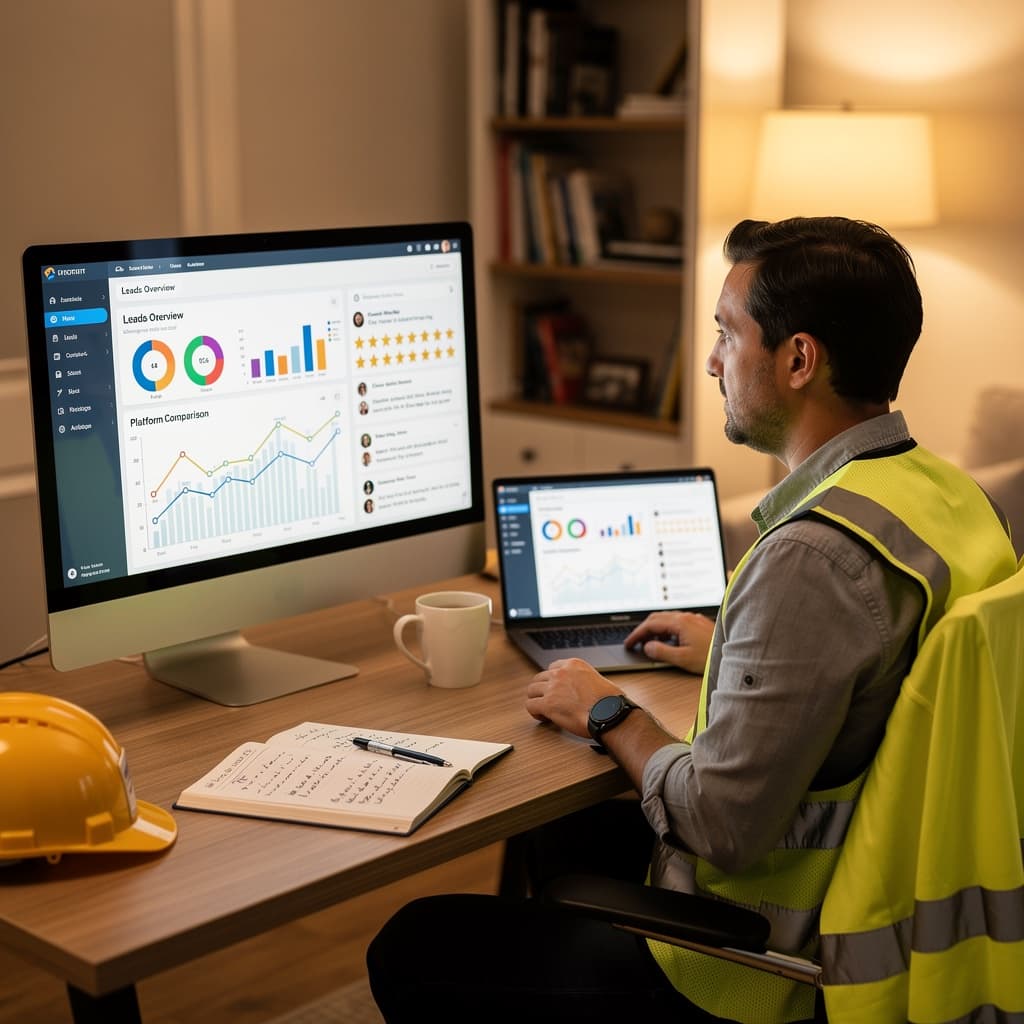
Start with 20–30 leads over two weeks. Track contact rate, qualification rate, and close rate separately in your CRM — SecurityTrax, Salesforce, or even a spreadsheet. If contact rate drops below 60% or qualification rate under 50%, the source has a quality problem that volume won't fix.
Home Security Lead FAQ
How much do home security leads cost?
$30–$175 per lead depending on type. Shared forms start at $30–$60, exclusive forms run $60–$120, live transfers cost $80–$175. Pay-per-install takes 50–70% of your monitoring revenue permanently — $450–$630 per customer over three years. Compare cost per install, not cost per lead.
What is a pay-per-install home security lead?
You pay nothing upfront. The vendor takes 50–70% of the monthly monitoring fee for the life of the contract. On a $25/month plan, that's $450–$630 over 36 months. Useful for new dealers with no marketing budget; dealers with cash flow get better economics from exclusive leads.
Are live transfer home security leads worth the higher price?
Yes — if you answer the phone. At $140 per transfer and 28% close rate, CPA lands around $500 against $720+ in 3-year monitoring margin. The math falls apart if calls go to voicemail.
What close rate should I expect?
Referrals: 40–60%. Live transfers: 20–35%. Google LSA: 25–44% book rate. Exclusive form fills: 12–20%. Shared leads: 5–10%. Door-to-door: 8–15%.
Should I buy exclusive or shared home security leads?
Exclusive. Lower CPA ($571 vs. $667 on the same budget), more installs, less wasted labor. Exception: large dealers with sub-60-second speed-to-lead who close shared leads above 10%.
How do ADT authorized dealer programs work?
You sell and install ADT-branded systems. At activation, ADT buys the monitoring contract at 28–36× the monthly rate. The program gives you brand credibility and some lead distribution, but most dealers generate 80%+ of their own leads. The trade-off: one-time payout instead of owning the recurring revenue.
What is ping-post lead distribution?
A real-time auction. When a homeowner submits a security inquiry, the aggregator pings multiple dealers with anonymized details (zip code, system type, timeline). You bid. The winner gets the lead. Ask any ping-post vendor what percentage of their leads produce contact rates above 60% before committing volume.
Last updated: November 2026